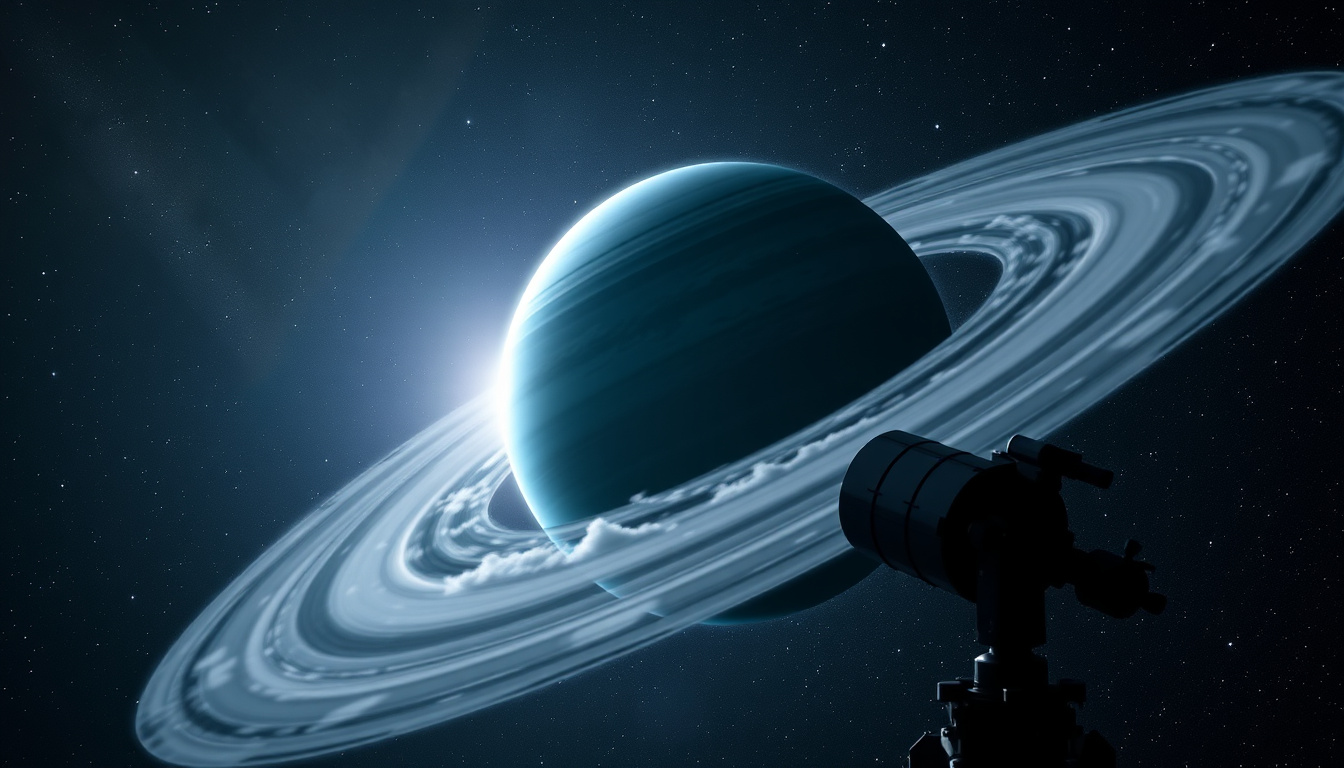
K2-18b has emerged as one of the most intriguing candidates in the search for extraterrestrial life. Located roughly 110 to 124 light-years away in the constellation Leo, this sub-Neptune exoplanet orbits within the habitable zone of its host star, a cool red dwarf designated K2-18. Recent observations from NASA’s James Webb Space Telescope have detected chemical signatures in its atmosphere that, while far from conclusive, have reignited scientific interest in the possibility of life beyond Earth.
The planet’s classification as a potential “hycean world”—a hypothetical class of ocean-covered planets with hydrogen-rich atmospheres—places it in a unique category that challenges conventional understanding of planetary habitability. Whether K2-18b harbors the conditions necessary for life remains one of the most compelling open questions in modern astronomy.
What is K2-18b?
K2-18b is a sub-Neptune exoplanet discovered in 2015 by NASA’s Kepler K2 mission. Classified as a super-Earth based on early observations, subsequent data has complicated this designation. The planet possesses approximately 8.6 times Earth’s mass and roughly 2.6 times Earth’s radius, placing it in a size category that straddles the boundary between rocky super-Earths and gaseous mini-Neptunes.
The leading theoretical framework for K2-18b describes it as a hycean world—a planet potentially covered by a global liquid water ocean beneath a thick hydrogen-rich atmosphere. This model gained traction following observations that revealed unexpectedly low ammonia levels in the atmosphere, a finding consistent with the hypothesis that any ammonia on the planet may have been absorbed into an underlying ocean. Alternative interpretations suggest K2-18b may simply be a mini-Neptune without significant surface water, highlighting ongoing scientific debate about the planet’s true nature.
110–124 light-years
Red dwarf K2-18
2.6× Earth radius
Hycean candidate
Key Insights on K2-18b
- K2-18b represents the first exoplanet where multiple potential biosignature gases have been detected simultaneously
- JWST observations have confirmed methane and carbon dioxide in the atmosphere, with tentative detection of dimethyl sulfide
- The planet orbits within its star’s habitable zone, where liquid water could theoretically exist on the surface
- The hydrogen-dominated atmosphere resembles those of Uranus and Neptune rather than rocky terrestrial planets
- Abundance levels of potential biosignatures exceed Earth concentrations by thousands of times, though this remains unexplained
- Multiple independent teams have reached similar conclusions using different instruments and analysis methods
- The scientific community maintains cautious optimism, emphasizing that current findings do not constitute evidence of life
Physical Characteristics Snapshot
| Property | Value | Notes |
|---|---|---|
| Mass | ~8.6 Earth masses | Measured via radial velocity |
| Radius | ~2.6 Earth radii | Sub-Neptune classification |
| Distance from Earth | 110–124 light-years | Located in constellation Leo |
| Host star type | M-dwarf (red dwarf) | Cool, low-mass star |
| Equilibrium temperature | Supports liquid water | Under hydrogen envelope |
| Primary atmosphere | Hydrogen-dominated | High metallicity similar to Uranus |
| Methane (CH₄) | ~1% abundance | Confirmed by JWST |
| Carbon dioxide (CO₂) | ~1% abundance | Confirmed by JWST |
| Ammonia (NH₃) | Low to absent | Consistent with ocean absorption |
| Water vapor | Possible <0.1% | Detection remains uncertain |
Where is K2-18b Located?
K2-18b resides in the constellation Leo, positioned at a distance of approximately 110 to 124 light-years from Earth. This range reflects slight variations in measurement methodologies among different research groups. For context, this distance means that light emitted from the planet today will reach Earth sometime around the year 2149, assuming current estimates hold.
The exoplanet orbits a red dwarf star designated K2-18, which is significantly cooler and less massive than our Sun. Despite the lower energy output of its host star, K2-18b receives sufficient radiation to maintain temperatures that could allow liquid water to exist beneath its atmosphere, assuming the hycean model proves accurate. The star’s relatively quiet behavior compared to other M-dwarfs may have contributed to the planet’s ability to retain its hydrogen envelope over billions of years.
The 110 to 124 light-year distance discrepancy stems from different parallax measurement techniques used by NASA and independent research teams. Both figures appear regularly in scientific literature, with the variation representing measurement uncertainty rather than a fundamental disagreement about the system’s location.
What Did JWST Find on K2-18b?
The James Webb Space Telescope has revolutionized the study of K2-18b since its initial observations began returning data in 2023. Using the NIRISS and NIRSpec instruments, the telescope captured the exoplanet’s atmospheric fingerprint during transits, when the planet passed in front of its host star. This technique allows astronomers to analyze starlight that filters through the atmosphere, revealing the chemical signatures present.
Atmospheric Composition Confirmed by JWST
The JWST data confirmed several key findings about K2-18b’s atmosphere. Methane and carbon dioxide were detected at approximately 1% abundance each, concentrations far higher than would be expected in a purely abiotic atmosphere without ongoing replenishment. Additionally, the spectrum revealed features consistent with a hydrogen-dominated atmosphere and notably low ammonia levels, which strengthens the hycean hypothesis.
The Mid-Infrared Instrument (MIRI) provided additional spectral coverage in the 6 to 12 micrometer range during 2025 observations. This longer-wavelength data revealed features at 3.4 sigma significance that proved inconsistent with simple featureless atmospheric models, suggesting more complex chemistry is at work in K2-18b’s atmosphere than initial analyses had anticipated.
The Dimethyl Sulfide Question
Perhaps the most tantalizing finding involves the tentative detection of dimethyl sulfide (DMS) and its chemical cousin dimethyl disulfide (DMDS). On Earth, these sulfur compounds are produced primarily by marine phytoplankton and other ocean-dwelling microorganisms. Their presence has long been considered a potential biosignature—a chemical indicator that might suggest the presence of life.
JWST observations have detected spectral features consistent with DMS/DMDS at approximately 3 sigma confidence, with abundance estimates exceeding 10 parts per million by volume. This concentration surpasses terrestrial levels by several orders of magnitude—reportedly thousands of times higher than the less than 1 part per billion found in Earth’s atmosphere. However, researchers stress that this detection remains tentative and requires additional observations to confirm.
A 3 sigma detection indicates approximately 99.7% probability that a signal is real rather than resulting from noise. While this exceeds the traditional threshold for “evidence” in some scientific fields, the astronomical community typically requires 5 sigma (99.9999% probability) before claiming discovery. Current DMS/DMDS detections fall below this stringent standard.
Dimethyl sulfide and dimethyl disulfide can potentially be produced through purely abiotic processes including photochemical reactions in the upper atmosphere, delivery via cometary impacts, or high-temperature chemical reactions in the planetary interior. The presence of these compounds does not automatically indicate biological activity.
The Mini-Neptune Versus Hycean Debate
Scientists remain divided on K2-18b’s fundamental nature. The hycean interpretation envisions a planet with a global liquid water ocean beneath its hydrogen atmosphere, potentially harboring life in surface or subsurface waters. The competing mini-Neptune model suggests the planet lacks a solid surface entirely, with dense hydrogen envelopes extending to great depths without any ocean interface.
Research published by Howard and colleagues in 2025 proposes an alternative explanation for the water signal ambiguity: unmixing between water and hydrogen in the planet’s interior could produce atmospheric signatures that mimic surface ocean detection without actually indicating liquid water at the surface. This hypothesis demonstrates the complexity of interpreting atmospheric data from planets where direct surface observation remains impossible with current technology.
Is K2-18b Habitable?
The question of habitability on K2-18b depends heavily on which planetary model proves correct. Under the hycean interpretation, liquid water oceans could exist beneath the hydrogen envelope, potentially at depths where temperature and pressure conditions resemble Earth’s oceans. This scenario raises the possibility of life similar to Earth’s marine ecosystems, though adapted to fundamentally different atmospheric conditions.
If K2-18b is instead a mini-Neptune, traditional definitions of habitability become problematic. The absence of a solid surface and the extreme pressures at depth would seemingly preclude the conditions necessary for life as we understand it. However, some researchers have speculated about the possibility of life existing in the upper atmospheric layers where conditions might be more temperate, though this remains highly speculative.
Current Scientific Consensus on Habitability
The astronomical community maintains a cautious stance on K2-18b’s habitability. While the planet’s location in the habitable zone and the presence of potential biosignature gases are encouraging, no scientists have claimed evidence of life. The NASA statement regarding JWST findings described a “possible detection of DMS” and noted that the atmosphere appears “ocean-consistent,” but stopped well short of claiming biological activity.
A critique published in August 2025 by Astrobiology.com argued that K2-18b “does not meet the standards of evidence for life” due to the non-unique nature of the detected features. This represents a significant counterpoint to more optimistic interpretations, highlighting the ongoing debate within the scientific community about how to evaluate potentially biological signals in exoplanet atmospheres.
Astrobiologists apply stringent criteria when evaluating potential biosignature detections. Key requirements include demonstrating that biological sources are the only plausible explanation for observed signals, ruling out all known abiotic production mechanisms, and achieving statistical confidence thresholds that eliminate the possibility of measurement artifacts. The James Webb Space Telescope’s recent detections on K2-18b, a sub-Neptune exoplanet in the habitable zone of its red dwarf star, have ignited debate about its potential habitability, as discussed further at What is risk management. What is risk management
Discovery and Observation Timeline
The story of K2-18b spans nearly a decade of increasingly sophisticated observations, each building upon previous discoveries while raising new questions about the planet’s true nature.
- 2015 — K2-18b discovered by the Kepler K2 mission, initially classified as a super-Earth orbiting within its star’s habitable zone.
- 2019 — NASA’s Hubble Space Telescope detects water vapor and confirms the presence of a hydrogen-rich atmosphere.
- 2023 — JWST NIRISS and NIRSpec observations reveal methane and carbon dioxide. Initial hints of dimethyl sulfide emerge at low statistical significance.
- 2024 — Cambridge University research team describes findings as “the most promising signs yet” of biosignatures, with DMS/DMDS signals strengthening.
- 2025 — JWST MIRI observations in mid-infrared wavelengths provide independent confirmation of spectral features, with DMS/DMDS detection reaching approximately 3 sigma confidence.
- Future — Additional JWST observation cycles are planned to gather more data and potentially achieve higher statistical confidence in biosignature detections.
What Is Established Versus What Remains Unclear
The scientific discourse surrounding K2-18b reflects the tension between confirmed findings and interpretive uncertainty that characterizes much of exoplanet research.
| Established Information | Unresolved Questions |
|---|---|
| Mass of approximately 8.6 Earth masses confirmed through multiple measurement techniques | Whether the planet has a solid surface or is a gas-dominated mini-Neptune |
| Methane and carbon dioxide present at roughly 1% abundance each | Whether the detected DMS/DMDS signals represent actual dimethyl sulfide or a different molecule |
| Hydrogen-dominated atmosphere with low ammonia | Whether liquid water oceans exist beneath the atmosphere |
| Orbit within habitable zone of host star | Whether biological processes could explain observed chemical abundances |
| Located approximately 110–124 light-years from Earth | Whether abiotic photochemical processes could produce detected concentrations |
| Atmospheric composition inconsistent with featureless models | Whether future observations can achieve the 5 sigma confidence needed for discovery claims |
Why K2-18b Matters for Astrobiology
K2-18b occupies a unique position in the emerging field of comparative astrobiology. Its combination of confirmed atmospheric complexity, potential ocean environment, and tentative biosignature detections makes it the most thoroughly characterized potentially habitable exoplanet to date. The wealth of data returned by JWST demonstrates the observatory’s capability to detect chemical signatures in exoplanet atmospheres, setting the stage for future missions with even greater sensitivity.
The hycean hypothesis represents a paradigm shift in considering habitability beyond Earth-like conditions. If such worlds prove common in the galaxy, the number of potentially habitable planets could increase dramatically, since hydrogen-dominated atmospheres can extend the habitable zone closer to cooler stars. This realization has profound implications for estimating the prevalence of life in the universe.
Moreover, the K2-18b case study illustrates how scientific progress occurs through competing hypotheses, independent verification, and gradual refinement of evidence. The ongoing debate between hycean and mini-Neptune proponents demonstrates healthy scientific skepticism that ultimately strengthens the validity of any eventual conclusions.
Expert Perspectives and Source Statements
“Possible detection of DMS.” — NASA / JWST Team, regarding K2-18b atmosphere composition findings
“The most promising signs yet of biological activity beyond Earth… concentrations thousands of times stronger than on Earth.” — Cambridge University research team, 2024–2025
“Extraordinary… potentially dimethyl sulfide… it’s a cool finding, but we’re not saying there’s life.” — Knicole Colón, JWST deputy project scientist, Planetary Society
“New independent evidence for DMS/DMDS at 3 sigma… more observations needed.” — arXiv paper, 2025
Expert opinions range from cautious optimism to skepticism based on differing assessments of detection reliability and alternative explanations. Readers should consider that scientific consensus typically emerges gradually through replication, debate, and accumulation of evidence rather than through any single study or statement.
Summary
K2-18b represents one of the most scientifically significant exoplanet discoveries of recent years. Located approximately 110 to 124 light-years away, this sub-Neptune world orbits within the habitable zone of its red dwarf host star. JWST observations have confirmed the presence of methane and carbon dioxide in its hydrogen-dominated atmosphere, while tentative detections of dimethyl sulfide have generated excitement about the possibility of biological activity. However, the scientific community maintains that current evidence falls short of establishing life on K2-18b. Further observations are needed to achieve higher confidence levels and rule out purely abiotic explanations for the detected chemical signatures. The debate between hycean and mini-Neptune models continues, highlighting the complexity of interpreting atmospheric data from distant worlds. For readers interested in how astronomers communicate across different domains, the NATO Phonetic Alphabet demonstrates systematic communication standards that parallel scientific classification systems.
Frequently Asked Questions
How far is K2-18b from Earth?
K2-18b is located approximately 110 to 124 light-years away in the constellation Leo. The variation in reported distance reflects measurement uncertainty rather than a fundamental disagreement about location.
What type of planet is K2-18b?
K2-18b is classified as either a super-Earth or sub-Neptune, with a mass roughly 8.6 times that of Earth and a radius approximately 2.6 times Earth’s. It may be a hycean world with a global ocean beneath a hydrogen atmosphere, though this remains unconfirmed.
Has life been detected on K2-18b?
No evidence of life has been confirmed on K2-18b. While JWST has detected chemical signatures potentially associated with life, these detections remain tentative and fall below the statistical confidence threshold typically required for claiming discovery of biosignatures.
What is dimethyl sulfide and why does it matter?
Dimethyl sulfide (DMS) is a sulfur compound produced on Earth primarily by marine microorganisms. Its detection on K2-18b generated excitement because it is considered a potential biosignature, though it can also be produced through purely chemical processes without biological involvement.
When was K2-18b discovered?
K2-18b was discovered in 2015 by NASA’s Kepler K2 mission. Subsequent observations by the Hubble Space Telescope in 2019 revealed water vapor and a hydrogen atmosphere, while JWST provided detailed atmospheric composition data beginning in 2023.
What would a hycean world be like?
A hycean world is hypothesized to feature a global liquid water ocean beneath a thick hydrogen-rich atmosphere. Such planets could potentially maintain liquid water at their surfaces despite receiving less stellar energy than Earth, extending the habitable zone to cooler stars. The conditions for life in such an environment remain speculative.
Will more observations of K2-18b be conducted?
Yes, additional JWST observation cycles are planned to gather more spectral data and potentially achieve higher statistical confidence in atmospheric detections. The scientific community has emphasized the need for continued monitoring before drawing definitive conclusions about K2-18b’s habitability or potential biosignatures.
Could K2-18b have life without meeting Earth’s conditions?
Some researchers theorize that life could potentially exist in environments quite different from Earth’s, including beneath ice-covered oceans or in dense atmospheric layers. However, the possibility of life adapted to hycean conditions remains entirely speculative, as no examples of such organisms are known.
Related stories



Marc Thompson is Managing Editor at Oz Briefly, overseeing daily newsroom workflow, commissioning and headline review.